what you need to know about controller salaries and jobs 7
Controller Salary: A Deep Dive into Industry Pay Standards
The role of a controller is a senior-level position in an organization’s accounting and finance department, responsible for overseeing financial reporting, analysis, and planning. As a critical component of the finance team, controllers play a vital role in shaping the company’s financial strategy and direction. One of the most significant factors that influence a controller’s career decisions is their salary. In this article, we’ll delve into the world of controller salaries, exploring the factors that impact earnings, growth potential, and career development.

However, according to the agency, those who already have air traffic control experience can be hired up to 35 years of age. Roles such as Chief Accounting Officer (CAO), Senior Accountant, and Staff Accountant are also integral to the accounting landscape. In this guest article, Eric Bloom of ITML Institute shares how CIOs can use office influence to help drive organizational objectives and personal professional advancement. Technology can help bridge the gap and propel us to reach both short- and long-term career goals.
Controller Job Descriptions, Types, and Salary Ranges
It typically takes 7-10 years of relevant accounting experience to reach a controller position paying over $150,000. However, aptitude, credentials like a CPA, and developing specialized expertise can accelerate career advancement. Understanding typical controller salary ranges and the variables impacting pay enables employers to develop competitive what you need to know about controller salaries and jobs compensation packages to attract and retain top financial leadership talent. If you’re personally interested in a controller role, take a hard look at your resume.

Revenue Analyst: Job Description & Average Salary
Generally the role of Controller would fit as the head of an accounting or finance team, reporting to the executive team. In many companies the controller manages accountants and reports directly to the Chief Financial Officer (CFO). In many of the hot technology startups and other small or growing companies you may find that the Controller role is simply filled by a CFO or CEO. In a very large and/or corporate environment, a controller might function as a web with assistant controllers targeting specific subgroups of the financial load.
Calculating controller salary
“I always know what my hours are each day, but it is not always at the same time. It is consistently inconsistent.” The FAA implemented new rules in 2024 to minimize controller fatigue by raising the minimum rest time between shifts from at least nine hours to at least 10 hours. According to Earley, there are several things controllers do to ensure nothing is missed. Initial tests are pass/fail, according to the agency, and failing certain exams will eliminate applicants from the hiring process.
- They oversee all employees involved in the accounting process, including accounts receivable (AR), accounts payable (AP), payroll, inventory, and compliance.
- Generally the role of Controller would fit as the head of an accounting or finance team, reporting to the executive team.
- ATC is a good option for people looking for a high-salary job that doesn’t require a college degree.
- One of the most significant factors that influence a controller’s career decisions is their salary.
- “I do have some shifts I work from midnight to 8 a.m., as well as some scattered 12-8 shifts, so it rotates,” he said.
“…job growth outlook for controllers is 16% between 2018-2028, a much faster rate than the average rate of growth…”
If a company has subsidiaries, the controller oversees their accounting operations and ensures their reporting and control systems fall within the parameters set by the parent company. Generally, accounting personnel at these subsidiary operations report to an accounting manager or vice president at the subsidiary, who in turn reports to the controller at the parent company. Boutique Recruiting offers targeted recruitment services to assist organizations in finding qualified candidates for controller and related positions. In the financial sector, recruitment challenges are significant, and addressing them requires a strategic approach. Understanding labor laws that impact hiring practices is crucial for both compliance and attracting the right candidates.
- As of 2021, there were 233,381 corporate controllers in the United States.
- Without that, you’ll have a really hard time getting the time of day from the hiring manager, let alone a job offer.
- Utilizing various resources—such as templates, AI writing tools, and feedback mechanisms—streamlines the creation of job descriptions.
Become an even more valuable contributor by strengthening your finance skills with Udemy’s online courses. U.S. Bureau of Labor Statistics data indicates employment for financial specialists is projected to grow by 6 percent from 2021 through 2031. Within these industries, large enterprises and firms in major metro areas tend to offer higher pay. Top priorities for a controller are people, reporting, and efficiency, as reported by Parker + Lynch.
What Do Controllers Do?
Accounting professionals who make it to the controller position enjoy above-average salaries. However, this is just the median number, and among the 50% who make more than this, many make a lot more. Controllers at Fortune 500 companies regularly earn well into six figures and sometimes more than $250,000. However, the advantage to working for a small business is that high-ranking employees, such as controllers, often get to share in the growth of the company.
The salary is good, but the work schedule can be inconsistent
You may consider taking on more responsibility in your current job or asking someone in a more executive role to mentor you. Soft skills can be learned and practiced in any role, such as building relationships, improving communication, teamwork, time management, and resourcefulness. The Bureau of Labor Statistics (BLS) doesn’t have a separate category for controllers. But in the current job market, nearly all companies hiring for the controller position want to see at least a bachelor’s degree and preferably a master’s degree, and they also generally want certified public accountants (CPAs). The controller has the final say in most companies on how these records are kept and where they are stored.
By understanding the factors that impact controller salaries and exploring opportunities for growth and development, professionals in this field can unlock their full earning potential and achieve long-term career success. In financial services, average controller salaries range from $120,000 to $170,000. At top tier investment banks and private equity firms, base compensation can exceed $200,000 for controllers with specialized expertise in capital markets, mergers and acquisitions, or other high demand skillsets. Bonuses and profit sharing may account for a significant portion of total pay. Geographic location, professional credentials like CPA, and advanced degrees also tend to correlate with higher controller salaries in the financial services sector. The average salary for controllers in the technology industry ranges from $120,000 to $150,000 per year.
What Is Double Entry Accounting and Bookkeeping 9
Double entry accounting: A complete guide for your businesses
Their use of cuneiform script to track debits and credits revealed an early understanding of balanced financial records. Double-entry accounting has been a cornerstone of financial management for centuries, offering a systematic approach to recording transactions. Its significance lies in its ability to provide a clear picture of an entity’s financial health by ensuring every transaction is recorded in two accounts, balancing debits and credits. Single-entry accounting (also known as single-entry bookkeeping) is a method of tracking a company’s assets, liabilities, income, and expenses by recording each transaction one single time. As its name suggests, it lists income and expenses in a single row, with positive values for income and negative values for expenses. The meticulous nature of double-entry accounting extends to the preparation of financial statements.
What is Double-Entry Bookkeeping?
Debits and credits are the cornerstone of double-entry bookkeeping. As noted above, every transaction has a dual effect on your business, and to keep the books balanced, the total amount debited must equal the total amount credited. The dual effect of double-entry bookkeeping also supports the accounting equation. If entered correctly, the two entries balance each other out, but if the numbers aren’t entered correctly, there will be errors in the balance sheet. The rise of credit-based transactions added complexity to accounting.
- In the case of assets and expenses, a debit indicates an increase in account balance.
- For the past 52 years, Harold Averkamp (CPA, MBA) has worked as an accounting supervisor, manager, consultant, university instructor, and innovator in teaching accounting online.
- A crucial element in ensuring financial reporting accuracy, double-entry bookkeeping, ensures that every transaction is accounted for in detail.
- HighRadius also enables fast and easy anomaly detection and facilitates journal entry posting for large volumes of transactions.
- Modified cash-basis and accrual accounting both use double-entry bookkeeping.
Intro to Double-entry Accounting: Your Pain-free Guide
Each entry shows how the transaction affects your business in two different ways. The Renaissance, spanning the 14th to the 17th century, was a period of intellectual and cultural transformation in Europe. Trade and commerce flourished, creating a demand for reliable financial records. During this time, Italian city-states like Venice and Florence became centers of trade and finance, where merchants and financiers adopted double-entry bookkeeping to manage transactions accurately. A ledger (also called a general ledger, accounting ledger, or financial ledger) is a record-keeping system for a company’s financial transaction data.
Infographic: Hyper-Personalisation As A Game-Changer In Financial Services
- After recording the transactions, we now have a running record of all accounts, and hence a complete accounting system.
- In other words, every transaction has an equal credit entry and debit entry in different accounts.
- The single entry bookkeeping system does not explicitly record the two-fold effect of transactions.
- The chart below summarizes the differences between single entry and double entry accounting.
- Provides comprehensive insights into financial health by allowing easy detection of errors, ensuring accuracy and preventing fraud.
- We bet you have thought about getting all of these operations in place for your business.
Because of the two-fold or duality effect of transactions, the total effect on the left will always be equal to total the effect on the right. Double Entry Bookkeeping is a standardized accounting system wherein each and every transaction results in adjustments to at least two offsetting accounts. Debit balances should always equal credit balances in a double-entry system.

His treatise emphasized the importance of maintaining meticulous journals and ledgers, enabling businesses to monitor their financial health clearly. This framework laid the foundation for modern accounting principles, influencing standards like GAAP and IFRS. By using double entry accounting, Sweet Treats ensures all transactions are accurately reflected in its financial statements.
Provides limited insight into financial health since it lacks details of each transaction, which may lead to discrepancies. It enhances accuracy and error detection through cross-referencing each transaction in debit or credit. Whether for expansion or a round of investment, keeping a clean book with up-to-date transactional facts is necessary. The Double entry system of bookkeeping keeps the system transparent and clean, thus keeping investor confidence high. The double-entry system is the most widely adopted system in the accounting world due to the many advantages over the single-entry system.
‘float’ vs. ‘double’ precision
One significant disadvantage is its complexity compared to single-entry accounting. Double-entry accounting requires a higher level of accounting knowledge and expertise to implement and manage effectively. This can be a challenge for small businesses or organisations with limited accounting resources. In essence, double-entry accounting stands as the superior choice for businesses seeking accuracy, transparency, and a comprehensive analysis of their financial performance.

This module assists financial institutions in identifying, tracking, and managing sales opportunities throughout the entire sales cycle. By providing a structured framework for managing leads, nurturing prospects, and closing deals, this feature empowers financial advisors to optimise their sales efforts and maximise revenue potential. One of the key strengths of Salesforce’s Financial Services CRM lies in its robust client management capabilities. This streamlined approach facilitates efficient customer service, allowing financial advisors to gain a comprehensive understanding of their client’s needs and deliver personalised financial solutions. This includes the initial investment made by the business owners, as well as retained earnings, which in asset accounts are the profits that have been reinvested in the business. This is the amount of money invested in a business by its owners and investors, plus all retained earnings from operations.
When you collect the money of $5,550, What Is Double Entry Accounting and Bookkeeping your cash increases (debit), and your receivables decrease (credit) by $5,550. Say you purchased $1,000 of supplies for your business every month for a year. You recorded the money coming out of your checking account but didn’t record the supplies expense totaling $12,000.
A New Day for Indian Insurance With Customer-Centric Technology
Single-entry accounting is a simple system, a lot like keeping your check register. You simply record the income that comes in and the expenses that go out. To set up double-entry bookkeeping, you first need to identify your accounts and create a journal for each one.
These guilds promoted standardized accounting practices to ensure consistency and reliability in financial reporting. The widespread use of ledgers allowed merchants to maintain detailed accounts of their activities, serving as precursors to modern accounting journals. While it’s possible to implement double entry accounting manually, using accounting tools like QuickBooks can significantly simplify the process. These tools automate many aspects of double entry accounting, such as categorizing transactions and generating financial reports. This not only saves time, but also reduces the risk of errors that can occur with manual bookkeeping.
How to Write Nonprofit Business Plan + Template
This article provides a brief overview of the steps involved in creating a nonprofit business plan. Normally written last but placed first in your business plan, your nonprofit executive summary provides an introduction to your entire business plan. The first page should describe your non-profit’s mission and purpose, summarize your market analysis that proves an identifiable need, and explain how your non-profit will meet that need.

Create a logistics and operations plan
- Use strong, action-oriented language that conveys a sense of purpose and urgency.
- This site provides an overview of business planning, with a special section focusing on nonprofits.
- A business plan is the foundation of your organization — the who, what, when, where, and how you’re going to make a positive impact.
- As a side-note, one area where a lot of business novices stall in terms of getting their plans off the ground is not knowing what format to choose or start with.
LegalZoom provides access to independent attorneys and self-service tools. LegalZoom is not a law firm and does not provide legal advice, except where authorized through its subsidiary law firm LZ Legal Services, LLC. Use of our products and services is governed by our Terms of Use and Privacy Policy. They can explain the tax implications of a nonprofit, nonprofit LLC, and a traditional limited liability company, so you can better understand your options. Keep in mind that you can still form a traditional LLC and pursue nonprofit status with the IRS if all owners of the LLC are themselves 501(c)(3) organizations. A credible budget is both incredibly detailed and completely justified.
Key Point 3
You can even use the business proposal template to collect grantor signatures. Crafting a nonprofit business plan requires meticulous organization and seamless data collection. As you dive into the process, Jotform can help you create customized forms that streamline various aspects of your planning. These goals should be reachable within the next 3-5 years—and flexible! Your nonprofit business plan is a living document, and should be regularly updated as priorities shift. The point of your plan is to remind you and your supporters what your organization is all about.
Identify a board of directors
Includes any relevant documentation that supports the information presented in the business plan, such as resumes, financial projections, market research data, and permits or licenses. Remember, each nonprofit organization is unique and may have different needs and requirements when it comes to board structure. It’s important to create a structure that works best for your particular organization, in compliance with any applicable local, state, or national laws. The Operations section of your business plan will take the organizational information you’ve gathered so far and expand the details! Highlight what the day-to-day will look like for your nonprofit, and how your funds and resources will make it possible.
How big is the market for my a non profit?
In a for-profit business plan, this section would be about marketing and sales strategies. For nonprofits, you’re going to talk about how you’re going to reach your target client population. For example, the financial model for a church based on donations is quite different than a non profit healthcare provider financial model based on provided health care services. It’s important to note that your nonprofit should not be set in stone—it can and should change and evolve. While your vision, values, and mission will likely remain the same, your nonprofit business plan may need to be revised from time to time. Your nonprofit organization also needs a business plan if you plan to secure support of any kind, be it monetary, in-kind, or even just support from volunteers.
Looking at examples of effective non-profit mission statements can provide inspiration and guidance as you craft your own. Consider studying mission statements from well-known non-profit organizations in your field or those with a similar focus. Pay attention to the language, tone, and structure of these mission statements, and identify elements that resonate with you. For many nonprofit organizations, competing for funding is an important issue.
How to Write a Non Profit Business Plan: Step by Step Guide
- This includes the process of obtaining tax-exempt status, which is crucial for non-profits to operate effectively.
- Other information has shown that around 12% of non-profits don’t make it past the 5-year mark, and this number expands to 17% at the 10-year mark.
- Starting a nonprofit organization is an excellent way to make a difference for a cause you’re passionate about.
Seeking feedback from beneficiaries and engaging with granting bodies and loan providers will ensure your organization is well-prepared to meet the market demands. Donor management and fundraising software support strategic planning by providing data-driven insights on donor behavior, giving patterns, and campaign effectiveness. These tools help analyze retention rates, optimize outreach efforts, and enable targeted campaigns. They streamline administrative tasks, freeing resources for core activities.
Expand this with a vision statement that outlines your ideal community. Emphasize fundamental principles such as empathy, moral rectitude, and diversity. Decide if your organization is an LLC, company, trust, or unincorporated organization. Clearly explain your nonprofit’s unique approach or services to differentiate it from competitors. Creating a successful nonprofit organization requires a thorough understanding of the requirements and expectations of your target market. Improve the success of your business plan by gathering valuable insights from in-depth research on your competitors, potential partners, and intended donors.
A nonprofit business plan may require additional sections or parts that aren’t included in a conventional business plan template. Dr. Ashleen Joy holds a Ph.D. in Business Law from Stanford University and is a professional business writer. With extensive experience in business planning, she has successfully helped numerous startups and established companies secure funding and achieve growth. Renowned in top American business forums for her strategic insights, Dr. Joy excels in writing compelling business plans and presentations.
A business plan for a nonprofit is similar to that of a for-profit business plan, in that you want it to serve as a clear, complete roadmap for your organization. When your plan is complete, questions such as “what goals are we trying to accomplish?” or “what is the true purpose of our organization?” should be clear and simple to answer. Statistics from the National Center for Charitable Statistics (NCCS) show that there are over 1.5 million nonprofit organizations currently operating in the U.S. alone. Many of these organizations are hard at work helping people in need and addressing the great issues of our time. However, doing how do i write a business plan for a nonprofit organization good work doesn’t necessarily translate into long-term success and financial stability.
how when and why do you prepare closing entries 2
What Are Closing Entries and How Do You Record Them?
This balance is then transferred to the Retained Earnings account. The accounts that need to start with a clean or $0 balance going into the next accounting period are revenue, income, and any dividends from January 2019. To determine the income (profit or loss) from the month of January, the store needs to close the income statement information from January 2019.

Close Expense Accounts
Companies are required to close their books at the end of each fiscal year so that they can prepare their annual financial statements and tax returns. Remember, dividends are a contra stockholders’ equity account.It is contra to retained earnings. This is the same figure found on the statement ofretained earnings. Notice that the balances in interest revenue and service revenueare now zero and are ready to accumulate revenues in the nextperiod. The Income Summary account has a credit balance of $10,240(the revenue sum).
- A sole proprietor or partnership often uses a separate drawings account to record withdrawals of cash by the owners.
- This is done by transferring their balances to the Income Summary account.
- Second, the closing process updates the retained earnings account to its correct end of period balance.
- Events are analyzed to find the impact on the financial position or to be more specific the impacts on the accounting equation.
Step 2: Close Expense accounts
To determine what closing entries need to be made, an accountant needs to run a trial balance and from it obtain the information necessary to prepare the closing entries. On December 31, the worksheet for Eli’s Consulting Services shows one revenue account, Fees Income. Second, the closing process updates the retained earnings account to its correct end of period balance. Recall that the balance in the retained earnings comes from the statement of change in equity and not the adjusted trial balance. The transfer to retained earnings is the mechanism that updates the actual retained earnings account balance in the general ledger. Now that the journal entries are prepared and posted, you are almost ready to start next year.
Does Accumulated Depreciation Go on the Balance Sheet?
All balance sheet accounts are examples of permanent or real accounts. The balance sheet is also adjusted to reflect the updated equity position. Temporary accounts are zeroed out, and retained earnings are recalibrated to include the net results of the concluded period. These adjustments ensure the balance sheet remains an accurate representation of the company’s financial standing. This process aligns with accounting standards like GAAP and IFRS, supporting transparency and reliability in financial reporting. At the end of the accounting period, all revenue account balances must be closed out to begin the new period with a zero balance.
For corporations, Income Summary is closed entirely to “Retained Earnings”. As you will see later, Income Summary is eventually closed to capital. Business Consulting Company, which closes its accounts at the end of the year, provides you with the following adjusted trial balance as of December 31, 2015. Dividends, representing earnings distributed to shareholders, are closed to the Retained Earnings account. For example, $50,000 in dividends is debited from Retained Earnings, reducing the balance available for future use or distribution.
Next, transfer all expense account balances to the income summary account. The total expenses are calculated and transferred to the income summary account. This zeros out the expense accounts and combines their effect with the revenues in the income summary by crediting the corresponding expenses. Without proper closing entries, your financial statements could become inaccurate, making it impossible to evaluate period-by-period performance.
- This step initially closes all expense accounts to the income summary account, which is finally closed to the retained earnings account in the next step.
- On December 31, the worksheet for Eli’s Consulting Services shows one revenue account, Fees Income.
- Having a zero balance in theseaccounts is important so a company can compare performance acrossperiods, particularly with income.
- The account has a zero balance throughout the entire accounting period until the closing entries are prepared.
- In a general financial accounting system, temporary or nominal accounts include revenue, expense, dividend, and income summary accounts.
Looking To Get Started?
Net income is the portion of gross income that’s left over after all expenses have been met. The term can also mean whatever they receive in their paycheck after taxes have been withheld. The term “net” relates to what’s left of a balance after deductions have been made from it.
Closing Journal Entries Process
It is a holding account for revenues and expenses before they are transferred to the retained earnings account. These permanent accounts form the foundation of your business’s balance sheet. However, you might wonder, where are the revenue, expense, and dividend accounts?
Therefore, this entry will ensure that the balance has been transferred on how when and why do you prepare closing entries the balance sheet. As mentioned earlier, this is just an intermediate account that is used to zero out all the other revenues and expenses accounts into one place. Closing entries are posted in the general ledger by transferring all revenue and expense account balances to the income summary account. Then, transfer the balance of the income summary account to the retained earnings account.
These accounts are closed by transferring them to an income summary account. The closing entries are then posted to the ledger accounts by the company. Companies usually create closing entries directly from the ledger’s adjusted balances. Companies generally journalize and post-closing entries only at the end of the annual accounting period, in contrast to the steps in the cycle. Long-term investments would appear in the property, plant, and equipment section of the balance sheet.
Example of a Closing Entry
Next, temporary accounts such as revenues and expenses are closed. Their balances are transferred to the income summary account, which determines the net profit or loss for the period. This process ensures that the income statement reflects the organization’s performance and that results are accurately incorporated into the equity section of the balance sheet. In accounting, closing entries reset all the temporary accounts to zero and transfer their net balances to permanent accounts. This process occurs after all regular transactions have been recorded and adjusting entries have been made for the accounting period.
Internal Revenue Service 3
Alabama Internal Revenue Service
Eligible taxpayers can use MilTax to electronically file a federal tax return and up to three state returns for free. The IRS publishes tax forms which taxpayers are required to choose from and use for calculating and reporting their federal tax obligations. The IRS also publishes a number of forms for its own internal operations, such as Forms 3471 and 4228 (which are used during the initial processing of income tax returns).
Report beneficial owners to FinCEN when required
You also do not have to provide your daytime phone number or email address. Thank you for visiting the Internal Revenue Service’s website, an official United States Government System, and reviewing our privacy policy. Our privacy policy explains how we handle the personally identifiable information (PII) that you provide to us when you visit us online to browse, obtain information, or conduct a transaction. PII includes information that is personal in nature and which might be used to identify you.
What if I filed my tax return or paid my taxes late?
A listing of all publicly available privacy reports can be found at the U.S. Notices for approved computer matching programs are published in the Federal Register and can be found on the U.S. There are exemptions for computer matching agreements for internal systems used for tax administration purposes.
With the three previous tax seasons dramatically impacted by the pandemic, the IRS has taken additional steps for 2023 to improve service for taxpayers. As part of the August passage of the Inflation Reduction Act, the IRS has hired more than 5,000 new telephone assistors and added more in-person staff to help support taxpayers. These where to file addresses are to be used only by taxpayers and tax professionals filing Form 4868 during calendar years 2022 to 2023. The Office of Privacy, Governmental Liaison and Disclosure can’t assist you with any type of tax matter.

Form 4868 addresses for taxpayers and tax professionals
If you have questions or need help, you can refer to the contact information provided in the notice. Although these forms are called information returns, they serve different functions. If you filed a joint return and you now have separate addresses, each of you should notify us of your new, separate addresses. Mail your signed statement to the address where you filed your last return.
I’m unable to access my account with the information I provided. What can I do?
The IRS is committed to protecting the privacy rights of America’s taxpayers. These rights are protected by the Internal Revenue Code, the Privacy Act of 1974, the Freedom of Information Act, and IRS policies and practices. We document much of our internal policy on these laws in Internal Revenue Manual 10.5, Privacy and Information Protection, and IRM 11.3, Disclosure of Official Information. The notice explains proposed changes to your tax return and information we used to determine them.
The Internal Revenue Service (IRS) is a subdivision of the Department of the Treasury responsible for administering and enforcing the nation’s tax laws. It processes tax returns, collects federal taxes, issues refunds, and ensures compliance through audits and enforcement actions. The agency also provides guidance and assistance to help individuals and businesses understand and meet their tax obligations. Generally, tax returns and return information are confidential, as stated in Code section 6103.
- To avoid delays in processing, people should avoid filing paper returns wherever possible.
- The offers that appear on this site are from companies that compensate us.
- Payments can be made through an ACH debit from your checking or savings account or using your debit/credit card.
- The deputy also administers and provides executive leadership for customer service, processing, tax law enforcement and financial management operations.
Tax-related identity theft occurs when someone uses your stolen Social Security number to file a tax return claiming a fraudulent refund. You may be unaware that this has happened until you e-file your return and discover that a return already has been filed using your SSN. Or, the IRS may send you a letter saying we have identified a suspicious return using your SSN.
You can view the status of your audit in your online account, under the “Records and Status” tab. Correspondence examination audits (audits by mail) Internal Revenue Service are the only audits available in online account at this time. You can view information about your audit status, such as the date the audit started, the date letters were issued and the date when the next response is due. Individual partners of partnerships and individual shareholders of S corporation businesses can visit IRS.gov/businessaccount to access Schedule K-1 information returns.
- The IRS may have also sent you correspondence that is updated in your status and you have not yet received it yet.
- Generally, a PCLIA is required before a program or system containing PII becomes operational.
- The Interactive Tax Assistant provides answers to many tax law questions.
- In order to qualify for assistance from an LITC, generally a taxpayer’s income must be below a certain threshold, and the amount in dispute with the IRS is usually less than $50,000.
- But this compensation does not influence the information we publish, or the reviews that you see on this site.
Constitution was ratified, authorizing Congress to impose a tax on income and leading to the creation of the Bureau of Internal Revenue. In 1953, the agency was renamed the Internal Revenue Service, and in subsequent decades underwent numerous reforms and reorganizations, most significantly in the 1990s. The IRS urges people to have all the information they need before they file a tax return. Filing a complete and accurate tax return can avoid extensive processing and refund delays as well as avoid the possibility of needing to file an amended tax return. More than 168 million individual tax returns are expected to be filed, with the vast majority of those coming before the April 18 tax deadline. People have three extra days to file this year due to the calendar.
Tips to help people with the 2023 tax season
You’ll be able to view the following documents listed in the table below which report income you received during the year. Issuers are required to send information return documents to the IRS by the following dates, although you will receive them earlier directly from the issuer. Documents for the current tax year will be made available in your account as the IRS receives them. The information we provide is based on the data we have at the time you log into your online account.
The IRS may also conduct a field audit, which is a full audit of your tax return and is often done in a face-to-face setting. Following the statutory period provided in the Administrative Procedure Act the Service decides on the final regulations “as is”, or as reflecting changes, or sometimes withdraws the proposed regulations. Generally, taxpayers may rely on proposed regulations until final regulations become effective. In July 1862, during the American Civil War, President Abraham Lincoln and Congress passed the Revenue Act of 1862, creating the office of commissioner of internal revenue and enacting a temporary income tax to pay war expenses. The IRS originates from the Office of Commissioner of Internal Revenue, a federal office created in 1862 to assess the nation’s first income tax to fund the American Civil War. The temporary measure funded over a fifth of the Union’s war expenses before being allowed to expire a decade later.
what you need to know about controller salaries and jobs 9
Crafting a Controller Job Description and Salary Insights
Within 3-5 years on the job, salaries often rise to $65,000 to $95,000 annually. After 5-10 years of proven success and leadership, controllers commonly make between $80,000 and $120,000 per year. Much depends on the size of the company, complexity of operations, and scope of the controller’s role. But the overall trajectory is one of fairly consistent pay growth for high performers. The average base pay for a controller in the manufacturing industry is approximately $110,000 per year.
What is the average salary for a controller in the United States?
“I always know what my hours are each day, but it is not always at the same time. It is consistently inconsistent.” The FAA implemented new rules in 2024 to minimize controller fatigue by raising the minimum rest time between shifts from at least nine hours to at least 10 hours. According to Earley, there are several things controllers do to ensure nothing is missed. Initial tests are pass/fail, according to the agency, and failing certain exams will eliminate applicants from the hiring process.
How Many Financial Controllers are in the United States?
“I work in front of a radar scope, and it can get busy at times, so I am not supposed to work in position more than two hours at a time, so we get a break to keep us refreshed,” he said. “We also do not work more than 10 hours in one day, and there is a certain amount of hours we have to be off before we can work again.” “Controllers are always learning on the job, like updating and refining the processes or learning new rules and procedures,” he explained. Earley said traffic controllers are not just confined to the airport tower but can also work in one of several hundred facilities around and between airports nationwide. ATC is a good option for people looking for a high-salary job that doesn’t require a college degree.
- Would working as a controller suit your business acumen and analytical mindset?
- Again, the controller may not conduct these duties on his own, but he is responsible for reviewing the work of his employees and using their findings to make final decisions on budgeting matters.
- Beyond these day-to-day needs, financial controllers frequently oversee special projects and may also work in other areas like project management or compliance.
- These long-term incentives encourage controllers to drive growth and profitability to increase shareholder value.
competencies and characteristics of controllers
Perhaps the accounting teams need more management and talent development. A financial overhaul of budgets might necessitate a shuffling of duties on your finance teams. A controller can fill a role that overlaps with management, human resources, and accounting. As head of the accounting department, a controller is responsible for managing the finances of an organization.
However, according to the agency, those who already have air traffic control experience can be hired up to 35 years of age. Roles such as Chief Accounting Officer (CAO), Senior Accountant, and Staff Accountant are also integral to the accounting landscape. In this guest article, Eric Bloom of ITML Institute shares how CIOs can use office influence to help drive organizational objectives and personal professional advancement. Technology can help bridge the gap and propel us to reach both short- and long-term career goals.
Ready to bring AI to your finance team?
- No hard and fast educational requirements exist for those wishing to become company controllers.
- You ensure the accurate and timely completion of monthly financial statements.
- On the other hand, at a smaller company the controller may essentially operate as the CFO (chief financial officer) role in its entirety.
- Soft skills can be learned and practiced in any role, such as building relationships, improving communication, teamwork, time management, and resourcefulness.
- Become an even more valuable contributor by strengthening your finance skills with Udemy’s online courses.
Salaries can span from $90,000 for controllers at small to mid-size manufacturers, ranging up to $130,000+ for those in executive level roles at large multinational corporations. Specific experience in lean manufacturing, ERP systems, and operations management may result in above average compensation. Bonuses are also common, especially for controllers who play a key strategic role in maintaining efficient production and boosting profit margins. In this article, we analyze controller salaries across industries to provide key benchmarks and insights into the factors impacting pay. Understanding typical ranges and variables influencing controller compensation enables both employers and job seekers to make informed decisions. A controller will likely be responsible for creating financial reports and projections, as well as maintaining records and preparing for audits.
All air traffic controllers must retire at 56 due to the higher possibility of memory or hearing loss, inattentiveness, or reduced eyesight in older individuals. Your earnings as a controller depend on your experience and qualifications. When you are new in the role, you start with a low salary since you have minimal experience. As you improve your expertise and qualifications, your salary increases gradually. Having certifications and additional qualifications improves your earning prospects. Would working as a controller suit your business acumen and analytical mindset?
Education Required
A controller’s main responsibilities focus on managing (or controlling) an accounting department or a company’s entire financial life. When it comes to accounting operations, controllers reign over that domain. They are the subject-matter experts the organization relies on to keep things in order. Entry-level controllers typically start out earning between $50,000 and $75,000 per year. Those with little to no prior experience can expect to be on the lower end of that range. Location also plays a role, with higher salaries generally seen in major metropolitan areas and financial hubs.
By aligning what you need to know about controller salaries and jobs job descriptions with your organization’s culture, you not only attract candidates who fit well within your establishment but also enhance employee retention. A strong culture can significantly impact productivity; studies show that 65% of employees believe they would be more productive at home than in the office, highlighting the importance of a supportive work environment. Moreover, almost one-third of employees have departed an organization due to workplace conflict, underscoring the necessity for clarity and alignment in job expectations. The journey to success may be challenging, but a strong culture and determination can lead to victory.
You may consider taking on more responsibility in your current job or asking someone in a more executive role to mentor you. Soft skills can be learned and practiced in any role, such as building relationships, improving communication, teamwork, time management, and resourcefulness. The Bureau of Labor Statistics (BLS) doesn’t have a separate category for controllers. But in the current job market, nearly all companies hiring for the controller position want to see at least a bachelor’s degree and preferably a master’s degree, and they also generally want certified public accountants (CPAs). The controller has the final say in most companies on how these records are kept and where they are stored.
Fundamentals of Finance and Accounting – Free Seminar Preview
To be clear, the ranges given for broad regions (e.g., “West Coast”) are averages, and states like California offer salaries that exceed the regional average. As you can see, higher salaries are available in coastal regions, and the highest salaries are in the New England area. A comptroller fulfills many of the responsibilities of a CFO, though most comptrollers are found working for the government, nonprofits, or educational organizations. Together, those techniques will help you craft meaningful, engaging, story-driven answers.

Controller: Job Description and Average Salary
If a company has subsidiaries, the controller oversees their accounting operations and ensures their reporting and control systems fall within the parameters set by the parent company. Generally, accounting personnel at these subsidiary operations report to an accounting manager or vice president at the subsidiary, who in turn reports to the controller at the parent company. Boutique Recruiting offers targeted recruitment services to assist organizations in finding qualified candidates for controller and related positions. In the financial sector, recruitment challenges are significant, and addressing them requires a strategic approach. Understanding labor laws that impact hiring practices is crucial for both compliance and attracting the right candidates.
Usually, the controller duties go far beyond a typical accountant job description. In most cases, they do a bit of both, keeping a watchful eye over the operations while also handling some of the nitty-gritty. Hiring a full-time accountant in the U.S. comes with a significant financial burden. While the average annual salary for an accountanting role varies by state, often exceeding $70,000–$85,000 per year, not including benefits, payroll taxes, and overhead costs. In contrast, remote staffing from LATAM—who are experienced in U.S. accounting standards and fluent in English—can be hired for 40% to 60% less while delivering the same level of expertise.
A Guide To Revenue Recognition 1
What Is ASC 606? The Ultimate Guide to Revenue Recognition
It may also affect a lender’s willingness to extend credit or renegotiate loan terms, which can hinder the company’s operational capabilities. Before revenue can be recognized, there must be reasonable assurance that the seller will collect the payment for the goods or services provided. For example, the selling company needs to assess whether it is probable that the buying company/consumer can and will pay within the agreed-upon timeframe. If collectability is not reasonably assured, revenue recognition is generally deferred until the payment is received or collectability becomes more certain. Imagine significantly cutting down on manual errors and freeing up your team’s valuable time. It’s meant to improve comparability between financial statements of companies that issue GAAP financial statements.
- It provides a reliable basis for making informed business decisions, from setting budgets to evaluating new opportunities.
- For more detailed information, you can explore resources on applying the new revenue recognition standard.
- For more insights on these challenges, check out this article on revenue recognition challenges.
- Getting revenue recognition right isn’t just about ticking boxes for accountants; it’s fundamental to the health and perception of your business.
Recognize Revenue
For SaaS businesses, this concept plays a critical role in financial reporting. Recognizing revenue too early (or too late) can distort your numbers, confuse your investors, and throw off your business model. It’s why standards exist in the first place—to ensure that financial statements reflect the real performance of a software company, not just the cash flow timing. Technology, such as advanced accounting software, plays a crucial role in automating complex revenue recognition calculations, reducing human errors, and ensuring compliance with standards like ASC 606.
The cash method, on the other hand, records revenue only when cash is received, which is simpler but less accurate for depicting a company’s financial health. The core principle of revenue recognition is to create a standard across financial and income statements accounting for industry-specific requirements and different business models. Incorrect revenue recognition throws off this standard and has far-reaching consequences both internally and externally.
How Revenue Recognition Works: A 5-Step Guide
Common challenges include handling multiple performance obligations, estimating variable consideration, and managing contract modifications. These require careful identification and allocation of transaction prices, robust estimation processes, and flexible contract management systems. Getting your revenue recognition right under ASC 606 is so important for keeping your financial reporting clear and compliant. It’s designed to help you consistently and accurately account for the money you earn from your customers. I know it might seem like a lot to take in at first, especially with all the official guidance out there, but breaking it down step-by-step makes the whole thing much more approachable.

A guide to revenue recognition
Under the cash accounting method, you would recognize that $6,000 right away when the money comes into your bank account. It doesn’t matter that the services will not all be rendered right away and will span over the next six months. This means that you will have an overstated account the first month and then an understated one for the months that follow. With this guide, even small businesses handling more transactions can tackle revenue recognition without feeling overwhelmed. Instead of recognizing a lump sum of revenue each month, it calculates a daily rate (Total Contract Value / Total Days in Contract).
In this case, the base design may be able to be sold or redirected to other customers at a point in the process, even when the ultimate product cannot. In other words, the timing of when a product becomes customized does not matter when evaluating how to recognize revenue. For internal stakeholders, like your management team and employees, more accurate financial data means better decision-making. You’ll have a clearer understanding of how your business is performing, allowing you to make informed choices about everything from budgeting to strategic planning. For example, if you’re a subscription-based service, ASC 606 helps you recognize revenue over the subscription period, giving you a more precise view of your recurring revenue streams. Adopting IND AS 115 may seem daunting, but with the right approach, you can avoid common pitfalls and ensure compliance.
Why Revenue Recognition Is So Important
This means you’d allocate $3,750 to the software and $1,250 to the training. This method, which is a core part of revenue recognition principles, ensures you recognize income for each part of the deal as it’s delivered. First things first, you absolutely need a clear contract with your customer – this is the bedrock of the entire revenue recognition process. Now, a contract, as the folks at Trullion clearly explain, doesn’t always have to be some super formal, lengthy document.
Step 5: Recognize Revenue
For a condensed discussion of the important concepts in ASC 606, refer to the executive summary in Chapter 1 of the guide. The May 2025 edition of the guide A Guide To Revenue Recognition has been updated to address various issues encountered in practice and highlight upcoming changes to certain sections of the guidance. A summary of the significant changes made in the May 2025 edition can be found in Appendix F of the guide.
Evaluate information technology (IT) systems
Think of it as choosing the right camera lens to see your business clearly – the better the lens, the smarter your decisions. We’ll look at the two main methods, cash and accrual, and see how they, along with specific industry practices, can show very different sides of your company’s performance. Getting these differences right is crucial for making sure your financial reporting is accurate, compliant, and truly shows how your business is doing. Especially if you handle lots of transactions or complex contracts, sorting this out early can prevent a lot of future stress. This is where solid systems, and perhaps even looking into automated revenue recognition solutions, can be a game-changer for accuracy and keeping things running smoothly.
- Revenue is the lifeblood of any business, but recognizing it accurately can be complex.
- Plus, it frees up your finance team from getting bogged down in spreadsheets so they can focus on more strategic financial analysis.
- It ensures transparent financial reporting, builds trust with investors, and helps management make informed business decisions.
- Misreported revenue can erode investor trust, impacting your company’s reputation and market value.
Healthcare and Complex Billing Arrangements
Remember things like discounts, refunds, credits, bonuses, incentives, etc. The ASC 606 could mean big changes for the way your business recognizes revenue, especially if you operate on a subscription model. It went into effect for publicly-traded companies in 2017 and went into effect for everyone else in January of 2019. So, if you do collect revenue you haven’t recognized yet, categorize the deferred revenue as a liability on your books. Then each month, move the amount you’ve recognized over from liability to income (from “deferred revenue” to plain old “revenue”).
Chart of accounts in business accounting Accounting Guide
When a transaction is entered into a company’s accounting software, it is common for the software to prompt for only one account name—this is because the software is programmed to automatically assign one of the accounts. For example, when using accounting software to write a check, the software automatically reduces the asset account Cash and prompts you to designate the other account(s) such as Rent Expense, Advertising Expense, etc. The chart of accounts lists the accounts that are available for recording transactions.
Get $20 Off Our PRO Materials
A diagram depicting a company’s hierarchy or chain of command, its business segments, functions, and departments. The following is an example of some of the accounts that might be included in a chart of accounts. For the past 52 years, Harold Averkamp (CPA, MBA) hasworked as an accounting supervisor, manager, consultant, university instructor, and innovator in teaching accounting online. He is the sole author of all the materials on AccountingCoach.com. For the past 52 years, Harold Averkamp (CPA, MBA) has worked as an accounting supervisor, manager, consultant, university instructor, and innovator in teaching accounting online.

In what order are liabilities listed in the chart of accounts?
- We focus on financial statement reporting and do not discuss how that differs from income tax reporting.
- Changes – It’s inevitable that you will need to add accounts to your chart in the future, but don’t drastically change the numbering structure and total number of accounts in the future.
- While most balance sheet accounts that need to be set up are common to all businesses, somedepend on the type of business.
- Chart of accounts (COA) is the numerical list of all accounts used by a business.
- The credit balance in this account comes from the entry wherein Bad Debts Expense is debited.
- The account names are listed in the chart of accounts in the same order in which they appear in company’s financial statements.
- A gap between account numbers allows for adding accounts in the future.
The inventory of a manufacturer should report the cost of its raw materials, work-in-process, and finished goods. The cost of inventory should include all costs necessary to acquire the items and to get them ready for sale. Operating expenses are the costs of a company’s main operations that have been used up during the period indicated on the income statement. For example, a retailer’s operating expenses consist of its cost of goods sold and its selling, general and administrative expenses (SG&A). This numbering system helps bookkeepers and accountants keep track of accounts along with what category they belong two. For instance, if an account’s name or description is ambiguous, the bookkeeper can simply look at the prefix to know exactly what it is.
Related In-Depth Explanations

Revenue and expense accounts tend to follow the standard of first listing the items most closely Travel Agency Accounting related to the operations of the business. In some cases, part or all of the expense accounts simply are listed in alphabetical order. Accounting software frequently includes sample charts of accounts for various types of businesses. It is expected that a company will expand and/or modify these sample charts of accounts so that the specific needs of the company are met. Once a business is up and running and transactions are routinely being recorded, the company may add more accounts or delete accounts that are never used. A current liability account that reports the amounts owed to employees for hours worked but not yet paid as of the date of the balance sheet.

Some accounts must be included due to tax reporting requirements. For example, in the U.S. the IRS requires that travel, entertainment, advertising, and several other expenses be tracked in individual accounts. One should check the appropriate tax regulations and generate a complete list of such required accounts. As you can see, each account is listed numerically in financial statement order with the number in the first column and the name or description in the second column. In above example of chart of accounts, notice that there are gaps between some account numbers. These gaps provide flexibility for adding more accounts if the company needs them in future.
- If you don’t leave gaps in between each number, you won’t be able to add new accounts in the right order.
- (Software for some small businesses may not require account numbers.) Account numbers are often five or more digits in length with each digit representing a division of the company, the department, the type of account, etc.
- Equity can be called shareholders’ equity in a corporation or owner’s equity in a sole proprietorship.
- The organizations operating in many territories with a lot of departments usually have account numbers consisting of five or more digits.
- Learn about charts of accounts in business accounting and see examples of such charts and account numbering.
Sample Chart of Accounts
For example, a number starting with “1” might tell us that the account is an asset account and a number starting with “2” might tell us that the account is a liability account. Normally, appropriate gaps are provided between numbers (i.e., some numbers are left unassigned) which makes it easy to add more accounts in future without disturbing other accounts that already exist in the chart. A current asset whose ending balance should report the cost of a merchandiser’s products awaiting to be sold.
- The accounting term that means an entry will be made on the left side of an account.
- Examples include cash, investments, accounts receivable, inventory, supplies, land, buildings, equipment, and vehicles.
- If the rented space was used to manufacture goods, the rent would be part of the cost of the products produced.
- The chart of accounts lists the accounts that are available for recording transactions.
- That part of the accounting system which contains the balance sheet and income statement accounts used for recording transactions.

There are many different ways to structure a chart of accounts, but the important thing to remember is that simplicity is key. The more accounts are added to the chart and the more complex the numbering system is, the more difficult it will be to keep track of them and actually use the accounting system. Although most accounting software packages like Quickbooks come with a standard or default list of accounts, bookkeepers can set up and customize their account structure to fit their business and industry. The organizations operating in many territories with a lot of departments usually have account numbers consisting of five or more digits. The account numbers of a company with different Certified Public Accountant departments and operations might have digits to reflect the department or operation to which the particular account relates.
If the business has more than one checking account, for example, the chart of accounts might include an account for each of them. The 500 year-old accounting system where every transaction is recorded into at least in the chart of accounts the balance sheet accounts are normally listed in which order two accounts. A corporation’s own stock that has been repurchased from stockholders.
- The bookkeeper would be able to tell the difference by the account number.
- For example, the account numbers of Procter and Gamble (a multinational consumer goods company) mostly consist of more than 30 digits to reflect different departments, operations, territories and regions etc.
- When a specific account is identified as uncollectible, the Allowance for Doubtful Accounts should be debited and Accounts Receivable should be credited.
- The account numbers of a company with different departments and operations might have digits to reflect the department or operation to which the particular account relates.
- The company decided to include a column to indicate whether a debit or credit will increase the amount in the account.
- This account balance or this calculated amount will be matched with the sales amount on the income statement.
An account might simply be named “insurance offset.” What does that mean? The bookkeeper would be able to tell the difference by the account number. An asset would have the prefix of 1 and an expense would have a prefix of 5.
What Is CIP Accounting? A Guide for Construction Teams

This gives you a firsthand look at how we can support your financial goals and enhance your business operations. Business A utilizes $2,000 worth of materials from its inventory for the expansion. In this guide, we’ll break down what construction-in-progress (CIP) accounting is, why it’s important, and how to implement it effectively. Contact PVM Accounting for tailored solutions to streamline your accounting practices. When CIP is managed properly, it increases transparency, helping investors and stakeholders understand which projects are in progress and how much has been spent. Strict adherence to GAAP requires meticulous documentation and accounting principles.
- Companies that build and manage properties may maintain separate CIP accounts for each property under development to facilitate the tracking of project expenses.
- This includes financial planning, risk management, record-keeping, and financial reporting.
- All costs related to construction, such as labor, materials, permits, and capitalized interest, should be recorded in the CIP account.
- Upon project completion, the CIP account is transitioned to the appropriate fixed-asset account.
- Together, they provide a framework to manage and report project expenses effectively.
- The fixed assets like building space, warehouse, plant manufacturing, etc., can take years.
- Tracking costs in CIP accounts helps monitor project expenses closely, identify potential budget issues, and make necessary adjustments early.
Key Steps in Construction in Progress Accounting
The balance sheet also includes information about the company’s assets, even those currently not in use. Log all expenses in the CIP account as debits, while recording credits in accounts payable. Engaging an experienced CIP accounting team ensures meticulous record-keeping and accurate financial reporting throughout the construction journey. Once the project is complete, the CIP balance is credited, and the corresponding fixed asset account is debited.
CIP Accounting Standards and Compliance
- The IAS 11.9 regulates the treatment of two or more assets’ construction as a single contract if they are negotiated as one contract.
- These expenses are reported under the “property, plant, and equipment” section of the balance sheet.
- CIP appears as a debit under the noncurrent asset section of the balance sheet.
- Their accountant initiates a Construction-in-Progress Office Expansion asset account to document construction expenses.
- All direct project costs are accumulated in the CIP account and transferred to the appropriate fixed asset account upon completion, where depreciation begins.
- Allocating costs is a crucial aaccountingspect of construction-in-progress (CIP) accounting.
- Following accounting standards like GAAP (Generally Accepted Accounting Principles) or IFRS (International Financial Reporting Standards) is essential for accurate reporting.
Once the project is completed and the asset becomes operational, transfer the total CIP amount to the appropriate fixed asset account (e.g., “Building”). CIP accounting is a critical aspect of financial management for construction and asset-intensive businesses. Upon project completion, the company transfers the CIP balance to the “Buildings” fixed asset account, and depreciation begins. The fixed assets like building space, warehouse, plant manufacturing, etc., can take years. A company can leave the financial statements blank for all times when work was in progress. It will violate the accrual principle to record some million revenues at the end of the construction.
Better Financial Control

Companies that don’t track CIP costs accurately and separately make their records more complicated than they need to be. Mixing CIP projects with others create a hazy picture of business finances as it indicates that a company is generating expenses that are producing zero profits. Thus, to keep things simple and the balance sheet balanced, it is best to keep them separate. Upon project completion, the CIP balance is reclassified to a fixed asset account, formally designating the asset as operational. For example, completing an office complex transfers accumulated CIP costs to a “Buildings” account under PP&E. This enables depreciation to begin, distributing the asset’s cost over its useful life.

What Does Construction in Progress Mean in Accounting Terms?
Once construction is complete, this $150,000 would transfer to the “Building” fixed asset account, where it will begin depreciating over its useful life. Imagine Business a plans to expand its office building to accommodate more employees. Their accountant initiates a Construction-in-Progress Office Expansion asset account to document construction expenses. For expert guidance on CIP accounting or construction financial management, contact PVM Accounting today!
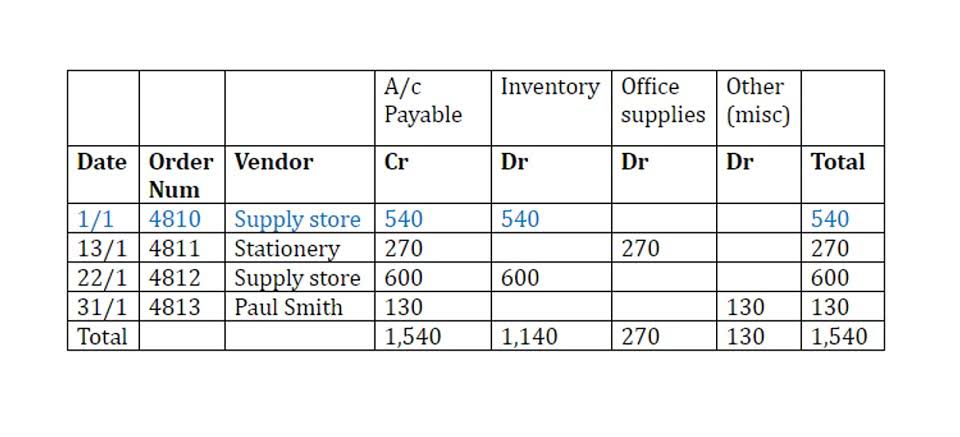
- Hire an experienced accountant or CFO to manage CIP accounts and navigate complex accounting requirements.
- As it goes, small construction companies rarely hire experts to track and record their transactions.
- Below, we’ll show you an example of what the recording may look like for a company.
- A firm’s CIP balance also reflects the sum of all the invoices from subcontractors, material suppliers and equipment providers that are billed indirectly through the general contractor.
- For example, Planyard automatically updates budgets as costs are recorded, ensuring real-time accuracy without the need for redundant data entry.
- The construction work in progress account is a prime target of auditors, since costs may be stored here longer than they should be, thereby avoiding depreciation until a later period.
- One thing to understand is that only capital costs related to an asset under construction are to be kept in the CIP account.
When the bookkeeping and payroll services project is completed, the accumulated costs move to the appropriate fixed asset account, such as “Building” or “Machinery.” Once a company completes construction and receives the certificate of occupancy for its warehouse, plant or office, the company officially places the asset in service. At that time the company removes the construction in progress account from the balance sheet, replacing it with a regular long-term asset account. Typically, companies that utilize construction financing to build a property obtain permanent financing that replaces the construction loan.
Companies must record any real estate they own on their balance sheets as long-term liabilities. These companies record their current construction projects as “construction in progress.” The construction in progress value reflects the total costs incurred to date. Accurate financial records are essential for construction companies to track project what is cip in accounting costs, stay within budget, and provide clarity for stakeholders. Construction projects require a specialized approach known as Construction in Progress (CIP) accounting. This method allows companies to manage expenses for ongoing projects, keeping finances organized until completion. In this guide we’ll explore CIP accounting in construction, its representation on the balance sheet, and how Planyard can streamline the process.
- Both are essential for accurate financial reporting, but understanding their distinct roles ensures clarity in financial statements.
- The CIP procedures dictate the proper recording of construction costs in financial statements.
- In most cases, the credit will be account payable or cash if paid immediately.
- Once expenses are recorded, they need to be allocated to the appropriate asset account.
- Regularly update the CIP account with new expenses and ensure accurate tracking for better financial management and reporting.

This classification separates CIP from operating expenses, highlighting financial commitments toward incomplete projects. Since construction projects are often multi-phase and lengthy, CIP accounting monitors these costs as assets, simplifying capital accounting investment tracking. When a project is complete, the cumulative CIP balance transfers to a fixed asset account, and depreciation begins. Allocating costs is a crucial aaccountingspect of construction-in-progress (CIP) accounting. It involves assigning expenses incurred during a construction project to the appropriate asset account systematically and accurately. Key differences include the type of project tracked and how costs are reported.
The difference between stocks and bonds

Stocks, also known as equities, represent ownership in a company; whereas, Bonds are debt securities issued by governments, municipalities, or corporations to raise capital. Appreciate will soon be offering a range of exciting new products, including mutual funds, MSME loans, Indian equities, personal loans, exotic assets, insurance, and IPOs. Suppose you buy a bond from a reputable corporation with a 5% interest rate. Each year, you receive regular interest payments (coupon payments). You get your original investment back at the end of the bond’s term. This shows how bonds can provide fixed interest and consistent income without stock price fluctuations.
Dividends and preferred stock

Stocks, bonds, mutual retained earnings funds, and exchange-traded funds (ETFs) can lose value if market conditions decline. The hierarchy of repayment dictates that secured creditors are paid first, followed by unsecured creditors, including most bondholders. Only after creditors are satisfied do stockholders receive any remaining assets. Within equity, preferred stockholders have a higher claim than common stockholders in liquidation, receiving payments before common stockholders, but after all bondholders and other creditors. Common stockholders are last in line and may receive little to nothing if assets are depleted. Bonds are subject to interest rate risk, where prices can fall when interest rates rise.

What’s a Better Investment Choice, Stock or Bonds?
Each bond has a certain par value (say, $1,000) and pays a coupon to investors. For instance, a $1,000 bond with a 4% coupon would pay $20 to the investor twice per year ($40 annually) until it matures. On one end, there are investment-grade bonds that are considered safe but tend to have low yields. As long as the bond’s coupon is higher than inflation during the lifetime of the bond, then an investor who holds the bond until maturity will make a profit.
- Stocks are exposed to market risks, such as economic shifts, company performance, and geopolitical events, which can lead to volatility and potential loss.
- When you own stocks, you own a share of the company and have voting rights at shareholder meetings.
- According to data compiled by Vanguard, a 60/40 portfolio — 60% stocks and 40% bonds — earned almost 7% in annualized total return over the prior decade through September 2024.
- These funds specialize in buying and selling bonds and pool investors’ money to do so, collecting a fee known as an expense ratio to cover costs and earn a profit.
- On the other hand, bonds are ideal for conservative investors or those nearing retirement.
Taxes

Investing is a crucial aspect of financial planning, and understanding the differences between bonds and stocks is essential for making informed investment decisions. Bonds and stocks are two popular investment options, each with distinct characteristics and potential benefits. They offer fixed income through regular interest payments and return of principal https://www.infus-gmbh.de/public-company-accounting-oversight-board/ at maturity. They carry higher risk but also the possibility of higher returns. Stocks are favoured by those with a longer investment horizon and a higher tolerance for market fluctuations.
- Beyond this basic similarity, the two categories of investments differ vastly from one another.
- Stocks face market risk, the possibility of losses from market downturns.
- How the securities are taxed is another major differentiator between stocks and bonds.
- When it’s about investment, every investor look for different investment avenues park their funds and provide good returns, such as stocks, bonds, debentures, futures, options, swaps, and so on.
- Diversifying with stocks and bonds helps balance risk and reward, providing growth potential from stocks and income stability from bonds.
If the business grows, your shares may rise in value, offering you the chance to sell them for a profit. However, your investment value may decrease if the company underperforms or the market drops. Bonds are a fixed obligation to pay that are difference between stocks and bonds issued by a corporation or government entity to investors. They usually include a periodic coupon payment, and are paid off as of a specific maturity date. Factors external to the organization also affect the price of its shares and bonds.
- To make informed decisions, you must understand what stocks are and how they can fit into your financial strategy.
- Within equity, preferred stockholders have a higher claim than common stockholders in liquidation, receiving payments before common stockholders, but after all bondholders and other creditors.
- History has shown that owning stocks and bonds is a good way to build wealth.
- When you invest, you make choices about what to do with your financial assets.
- When you invest in bonds, you’re essentially giving a loan to an institution.
- Like stocks, most online brokers have a trading platform for buying and selling corporate and municipal bonds, both new issues (from the company) and secondary markets (from other investors).
This stock vs. bond risk is why many investors combine both in their portfolios for balance. When you buy stocks, you’re purchasing a share of ownership in a company. This means you benefit from the company’s success and may have voting rights on key decisions. In contrast, buying bonds is lending money to a company or government. In return, they pay you interest over time, but you don’t own any part of the company. Government bonds are issued by national governments (like U.S. Treasury bonds) and are considered one of the safest investments because the government backs them.
RECENT POSTS
categories
- Uncategorized
- Post
- Blog
- News
- AI News
- 2
- Форекс Обучение
- posts
- IT Образование
- FinTech
- Software development
- guide
- Bookkeeping
- Sober living
- Sober Living
- Pinco TR
- New world news
- Pinup Azərbaycan
- pinco
- casino
- 1WIN Official In Russia
- 888starz bd
- Slots
- casino online ar
- 1win Turkiye
- casino onlina ca
- online casino au
- ricky casino australia
- 22bet
- crazy time
- Kasyno Online PL
- casibom tr
- 1xbet casino BD
- Комета Казино
- Mostbet Russia
- slottica
- Basaribet
- sweet bonanza TR
- casinò online it
- Masalbet
- verde casino hungary
- sweet bonanza
- Финтех
- Bankobet
- king johnnie
- sugar rush
- Ramenbet
- 1win uzbekistan
- mostbet tr
- bbrbet mx
- 1win India
- Maribet casino TR
- Plinko
- 1xbet KR
- book of ra
- 1xbet malaysia
- Mini-reviews
- 1Win AZ Casino
- Gama Casino
- csdino
- aviator casino fr
- bbrbet colombia
- vulkan vegas germany
- Review
- mostbet italy
- ozwin au casino
- casino-glory india
- Monobrand
- IT Vacancies
- bizzo casino
- aviator casino DE
- verde casino poland
- verde casino romania
- Qizilbilet
- plinko_pl
- Pin UP
- Vovan Casino
- 1w
- Форекс Брокеры
- Pin Up Peru
- Pin Up Brazil
- mono slot
- glory-casinos tr
- 1xbet Morocco
- KaravanBet Casino
- aviator ng
- aviator ke
- aviator mz
- mostbet norway
- fortune tiger brazil
- reviewer
- Форекс обучение
- pelican casino PL
- plinko in
- monoslot
- aviator IN
- 22Bet BD
- 22bet IT
- 1win fr
- austria
- Brand
- 1xbet india
- mostbet hungary
- Game
- 1xbet pt
- Slots`
- plinko UK
- Mr Bet casino DE
- Cryptocurrency service
- Forex Trading
- 1xbet Korea
- mx-bbrbet-casino
- monogame
- mini-review
- book of ra it
- casibom-tg
- mr jack bet brazil
- casino svensk licens
- Новости Криптовалют
- b1bet BR
- mostbet
- 1xbet
- 1xbet russian1
- slot
- mombrand
- Reviewe
- online-casino
Archives
2025
- September (262)
- August (410)
- July (337)
- June (10)
- May (8)
- April (26)
- March (2)
- February (2)
- January (2)